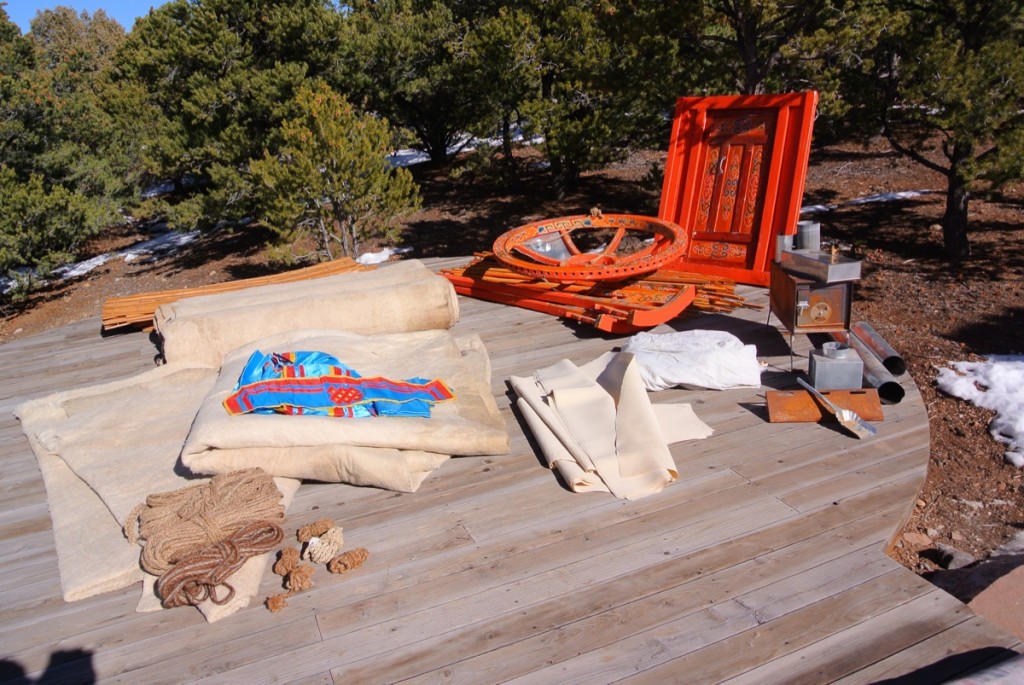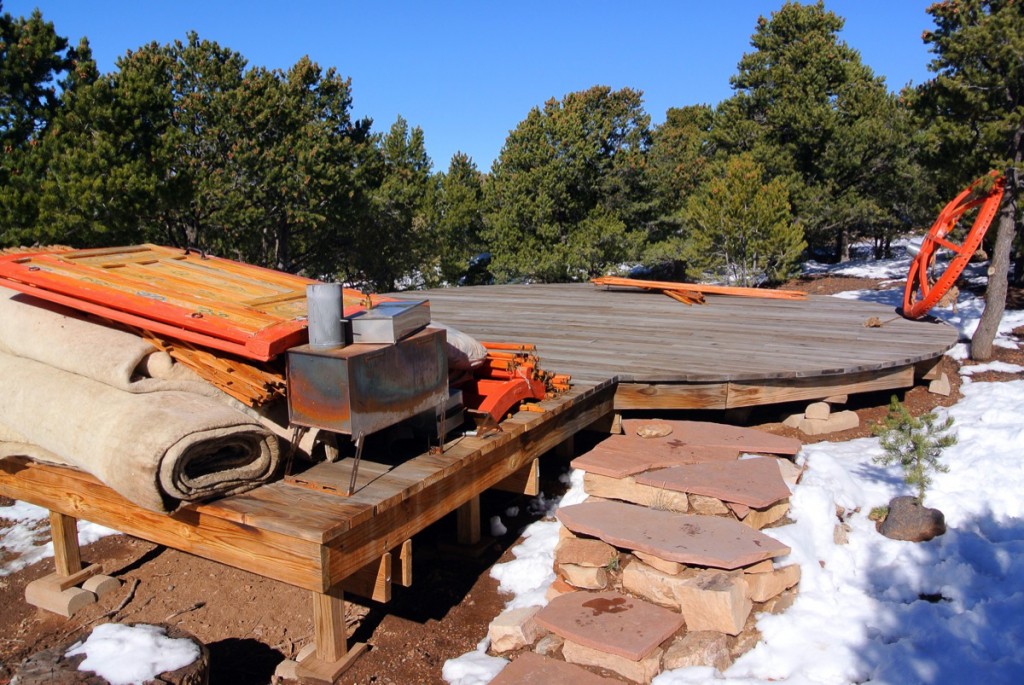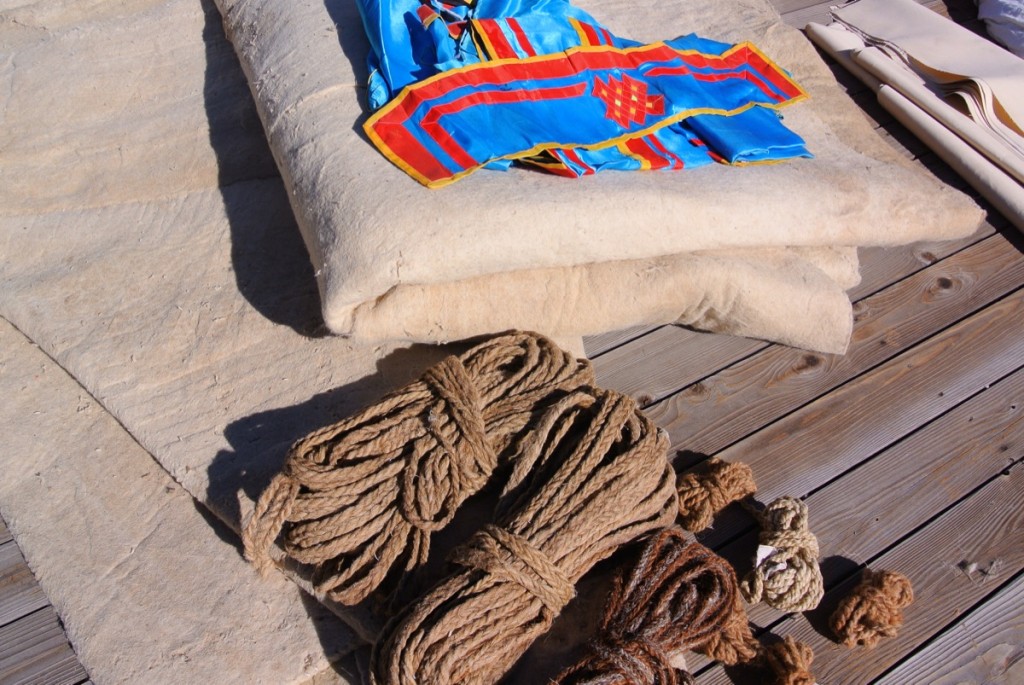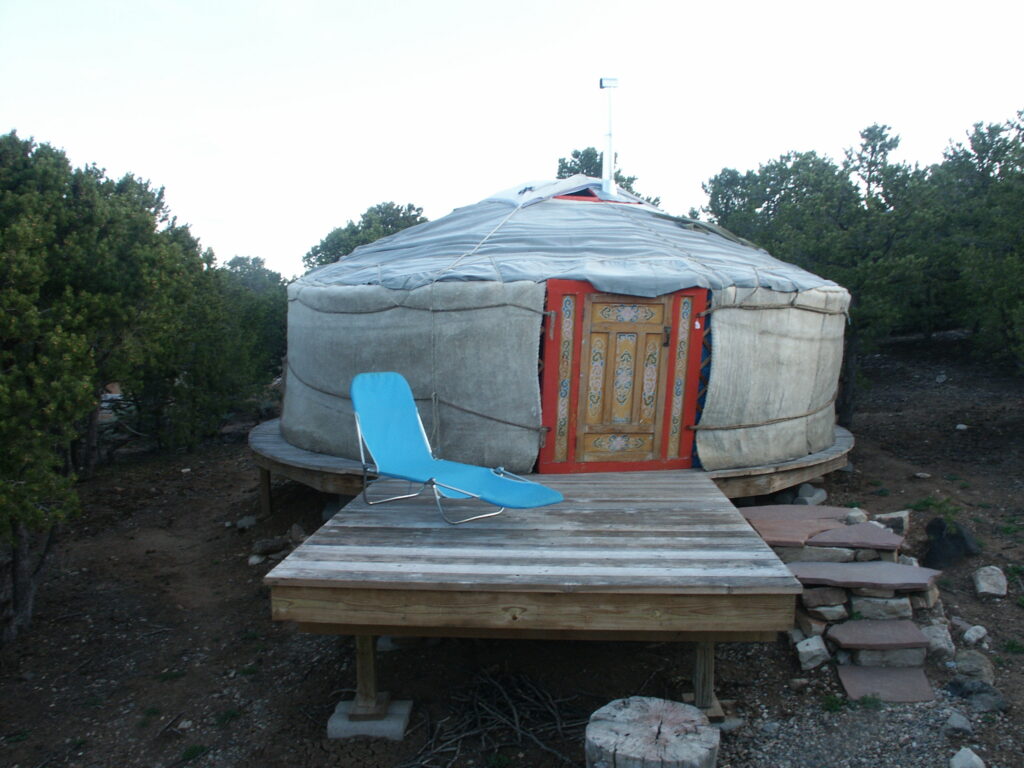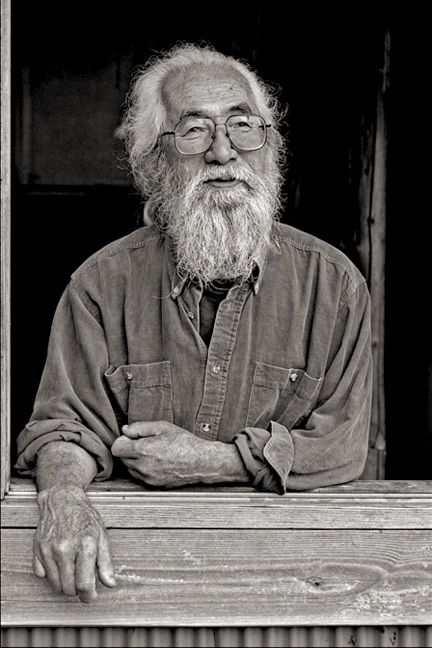
from Mongolian Cloud Houses, About the Author:
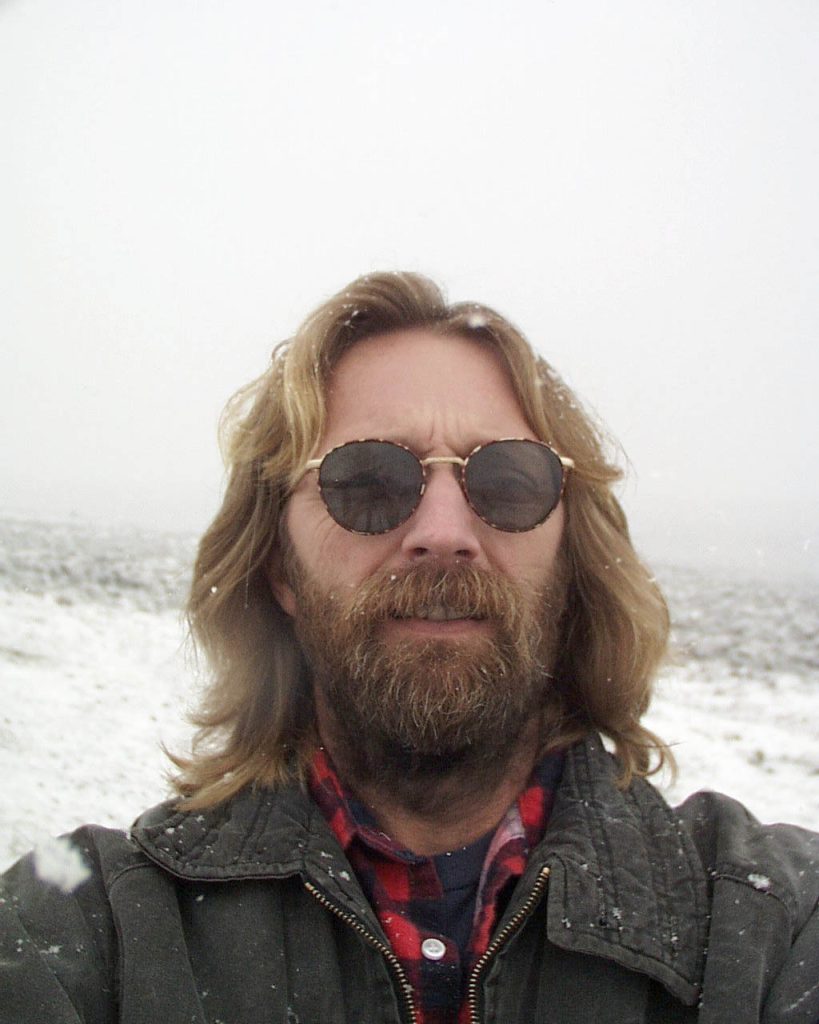
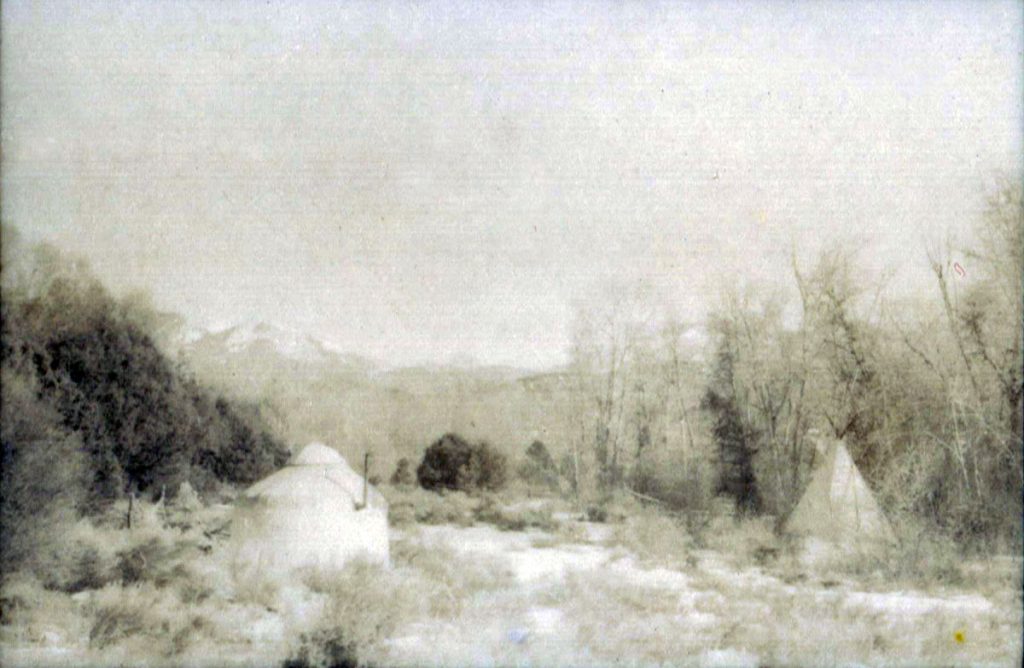
Dan Frank Kuehn grew up in the back of a North Dakota grocery store owned by his parents, Walter and Ann Kuehn.
In the summer of 1970, Dan, 19, and his brother Herb, 18, floated 2,000 miles down the Missouri and Mississippi Rivers, from Bismarck, North Dakota to Memphis, Tennessee, searching for adventure.
He became interested in yurts and Mongolian culture in 1975, encouraged by the flourishing northern New Mexico alternative lifestyle scene. After many models and experiments, Dan spent a few years living in yurts he built himself (1976–1980), and completed the writing and drawing of the original Mongolian Cloud Houses in 1980.
Then Dan moved to Maui, Hawaii, and for 20 years he worked as a landscape designer. Native plant landscaping and garden guest house managing were his main occupations when along came the opportunity to revive his book on yurts.
from the Farmers Forum, suplement to the Fargo Forum
Cloud house’s silver lining
By Sherri Richards
December 28, 2006
Dan Frank Kuehn has come full circle when it comes to the yurt – a circular, portable tent used by nomads in Mongolia.
The former Moorhead resident first developed an interest in the ancient structures in the 1970s while living in Taos, N.M.
He built three prototypes and lived a rather nomadic lifestyle outside the city. He hitchhiked to the local café to play his guitar for tips and a meal. He bathed in a nearby stream and set up a sweat lodge to stay clean.
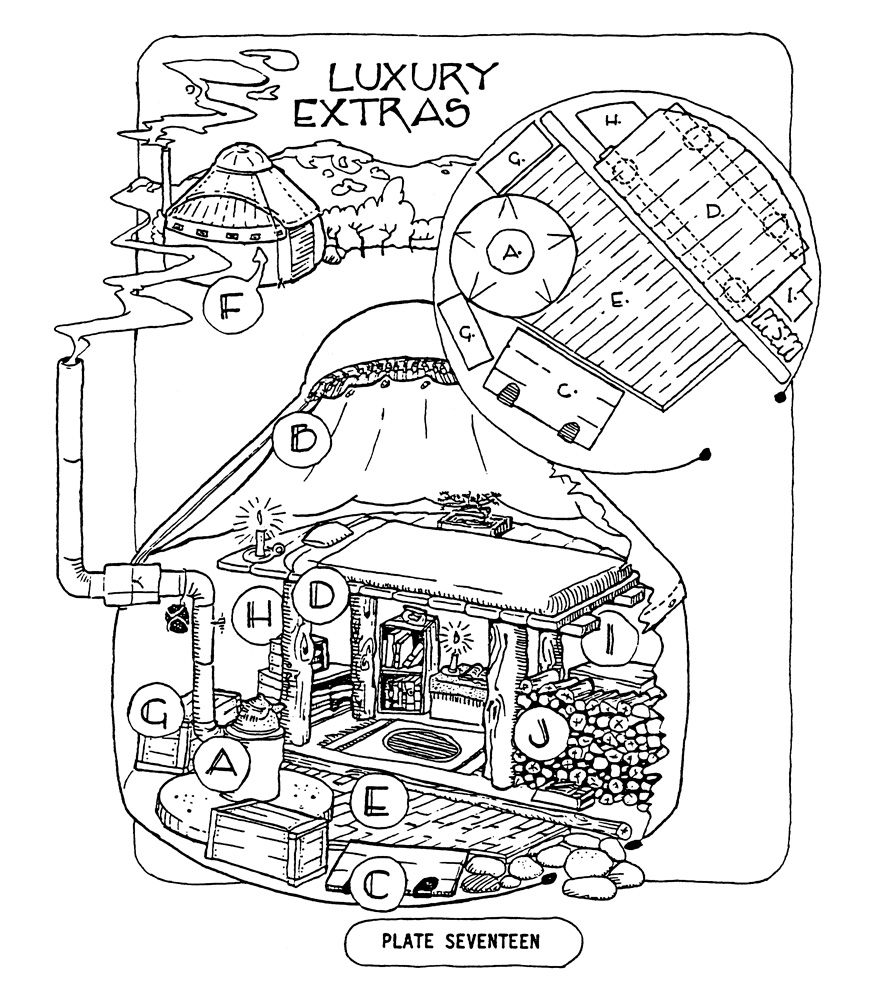
He documented the process, and wrote and illustrated a book about how to make a yurt and live comfortably. He published 500 copies of his book in 1980 at a local copy shop.
Later that year, he moved to Hawaii. Over the course of 18 years, he forgot about the yurt.
Now, more than two decades later, his book – “Mongolian Cloud Houses: How to Make a Yurt and Live Comfortably” – has been republished by Shelter Publications, and Kuehn once again finds himself intrigued by the domed structure.
He used an advance from the book to buy a yurt from Mongolia. He wants to buy land, set up the tent and live in it while he builds a more permanent structure.
“Instead of being a nomad, I’ll be using it to help me settle down,” Kuehn said. “We may have come to a point in our society where we can live this way. Live as nomads and still have technology.”
Kuehn graduated from Moorhead High School and took a two-year course in commercial art at the technical college in Moorhead.
His interest in yurts, also called gers, started after he arrived in Taos in 1972. He looked at old issues of National Geographic and visited an exhibit on yurts at the Denver Art Museum.
He decided to build the structure himself using local, free materials such as willow, stiff grasses and rubber inner tubes. He sewed a canvas cover by hand. He even figured out how to dig out a root cellar that worked like a refrigerator.
“Over the course of five years, I moved around quite a bit,” Kuehn said. The walls folded up like a baby gate, allowing him to set up in 10 different places. “I was able to fold up my life and move on,” he said. Kuehn eventually decided he needed to move on to something better.
He seized a chance to move to Hawaii and recreate himself. He became a banana farmer and then managed a guest house. He lived on Maui for 18 years.
When he returned to the states in 1998 for his step-father’s funeral, he realized he wanted to live on the mainland again. He shuttled back and forth between Taos and Maui for a few years.
In that time a letter arrived in the mail. His work on yurts would be featured in an anthology, “Home Work,” and the publishers wanted to reprint his book.
“Our company is trying to get back into publishing books about building and construction and alternative sustainable architecture,” said Robert “Lew” Lewandowski, associate editor at Shelter Publications. “This book just seemed like it was a nice little book to put back out there.”
If they republish it, Kuehn said he would have to rewrite it
“I decided I had to build another yurt myself so I could re-educate myself,” he said. He was still in Maui, so he used bamboo. It’s now used as an aviary at an animal rescue and sanctuary, he said.
The book, updated, expanded and with several new illustrations, came out in May.
Kuehn did a lot of research on the Internet. “I’m suddenly part of a global community of yurt builders,” he said.
Now 54, Kuehn teaches Webrelated classes at the University of New Mexico at Taos and designs Web sites, mostly for small businesses.
Technology is central to his life, but he is excited to get back into building those Mongolian cloud houses.
“It’s definitely not comfortable in the sense of living in a house with central heating and all that kind of things,” Kuehn said. “There’s a certain comfort in being close to the land.”